Cazin: We learned how to choose sources wisely
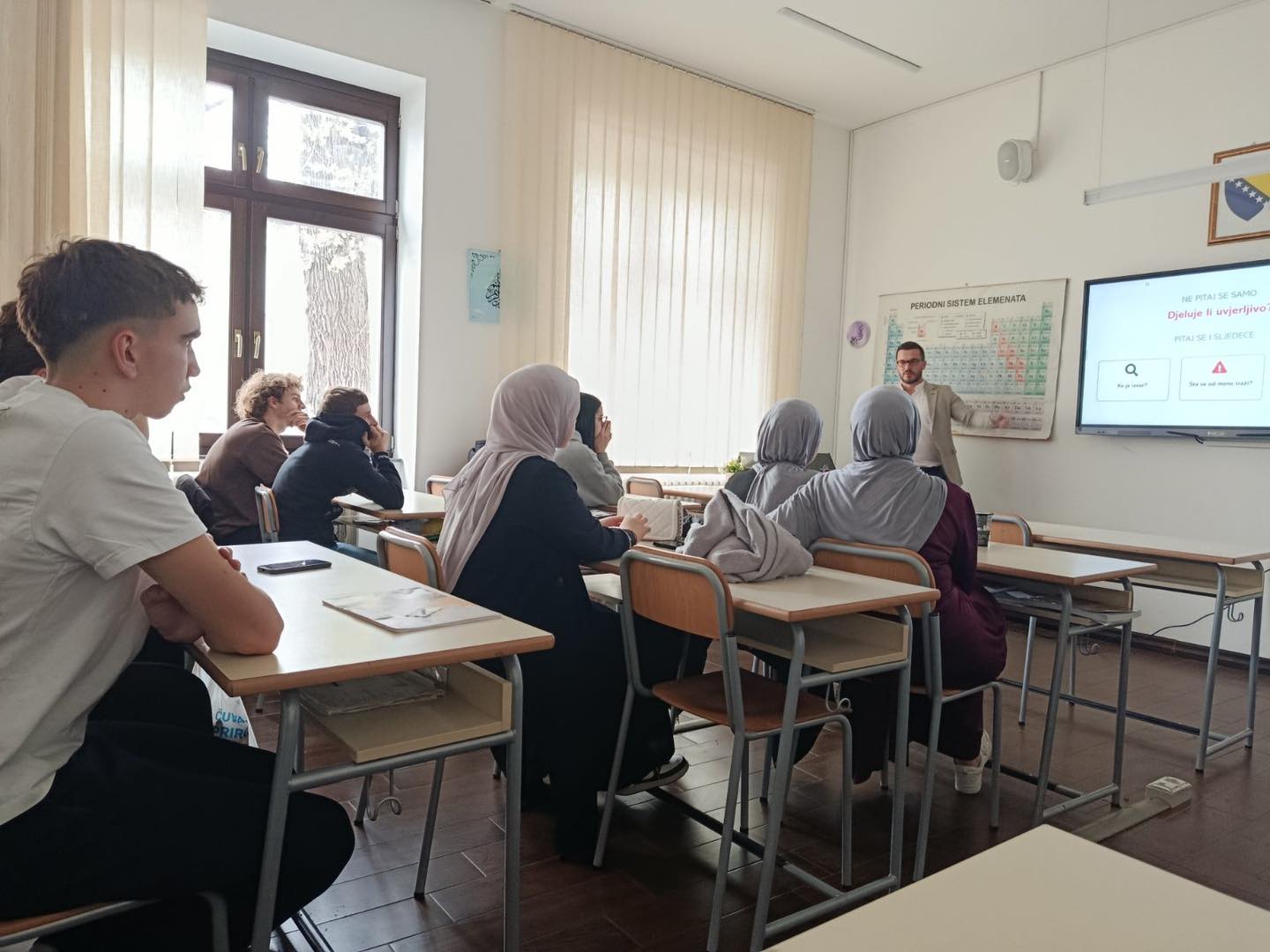
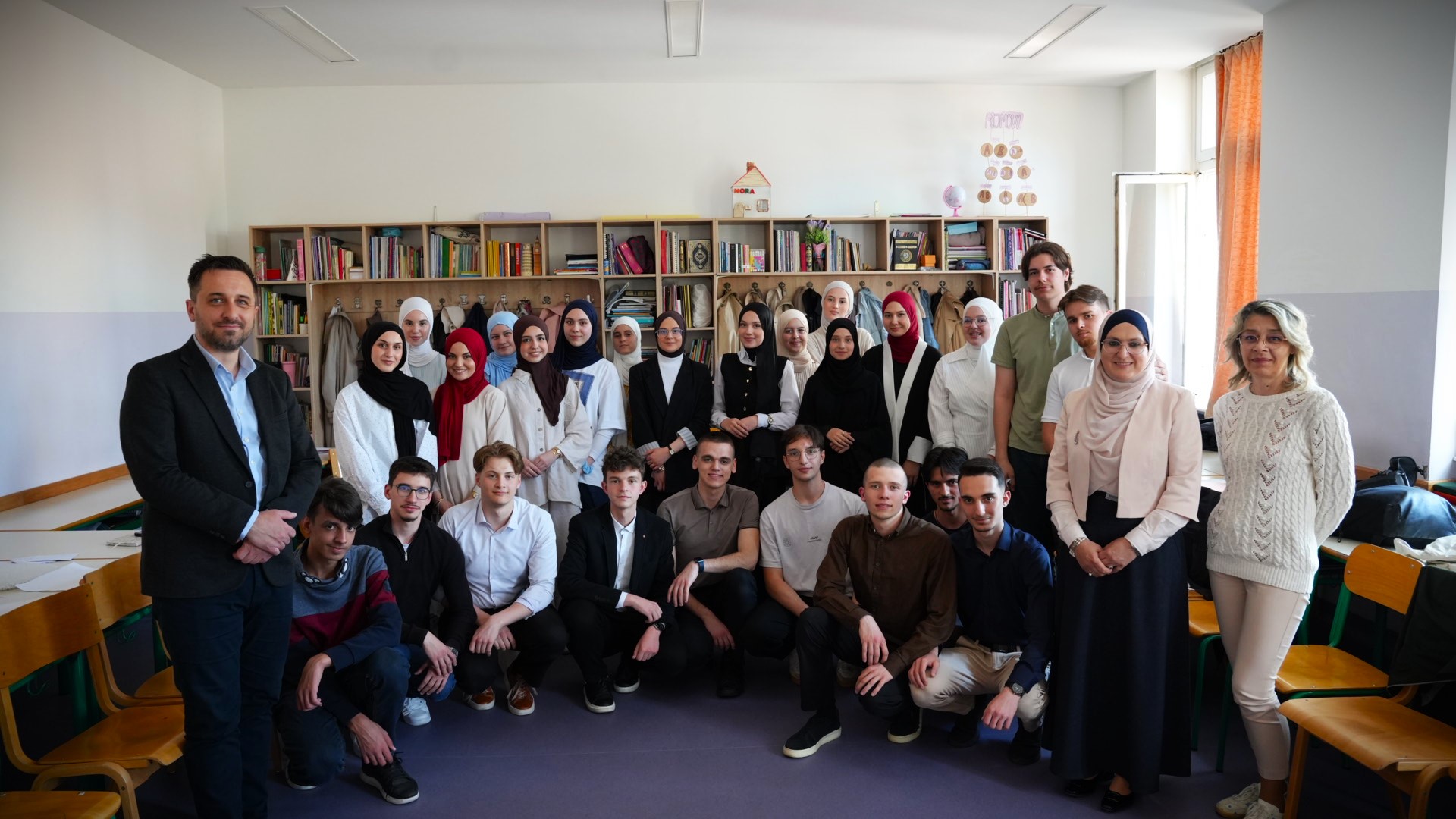
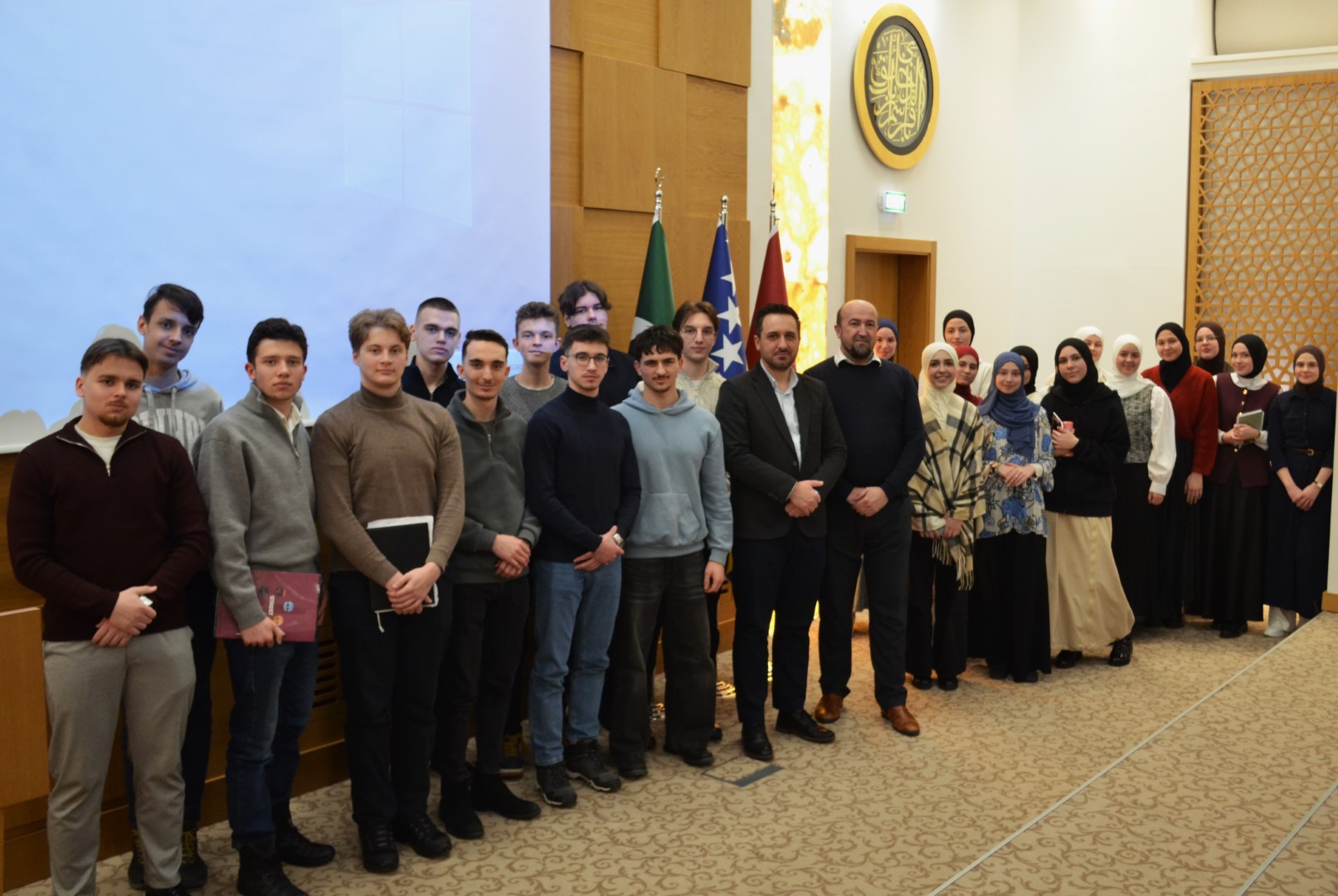
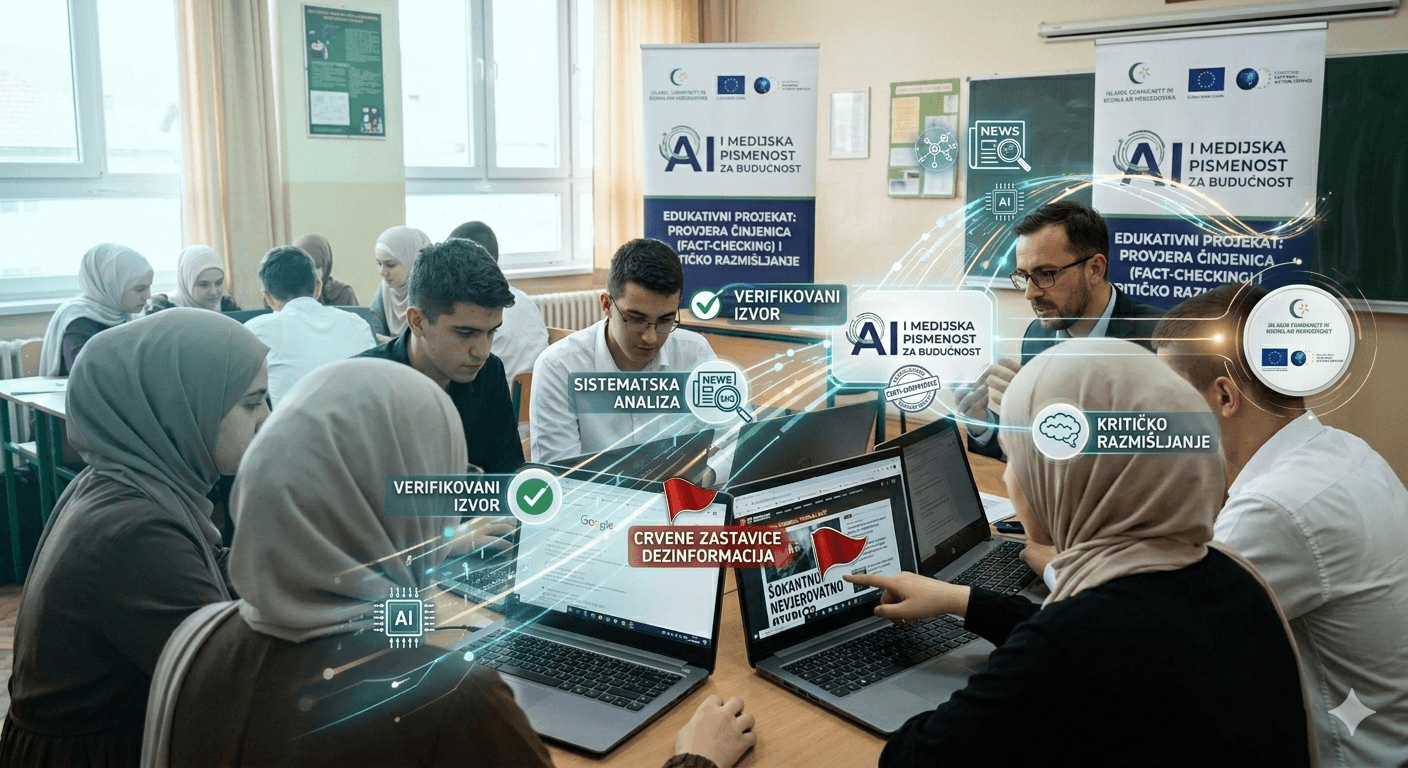
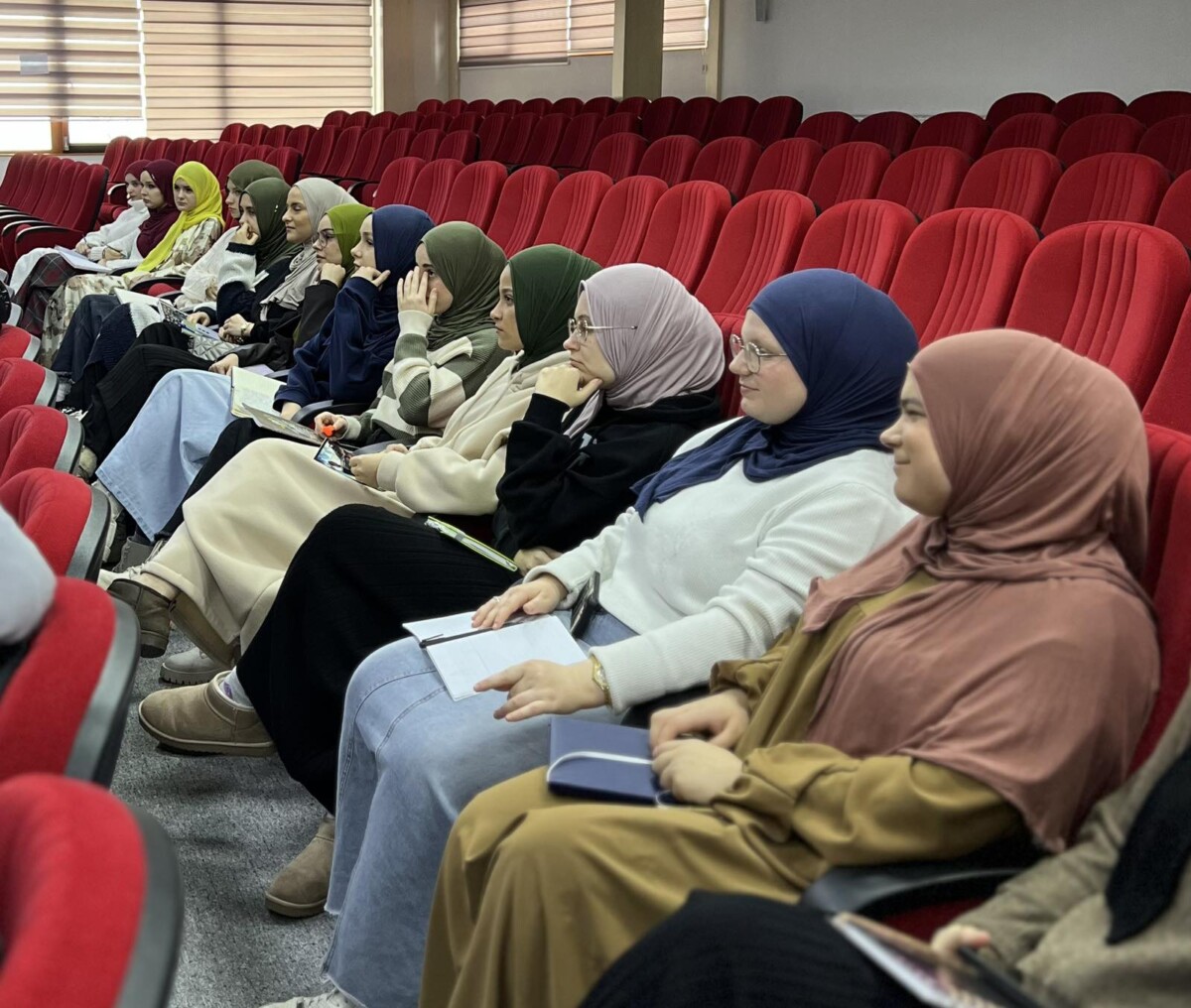
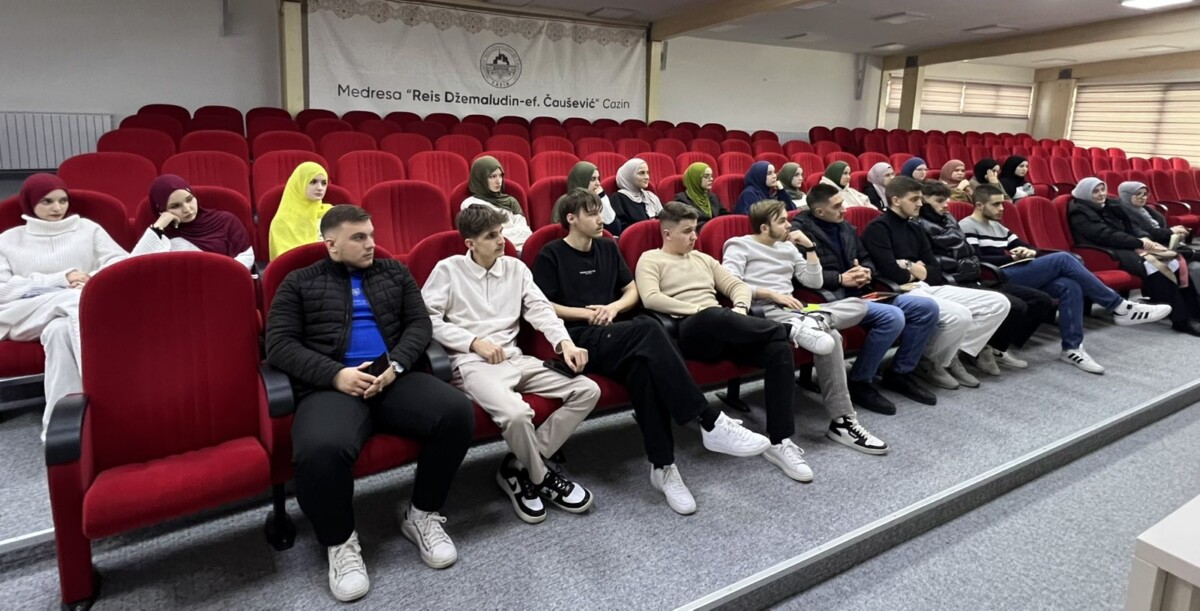
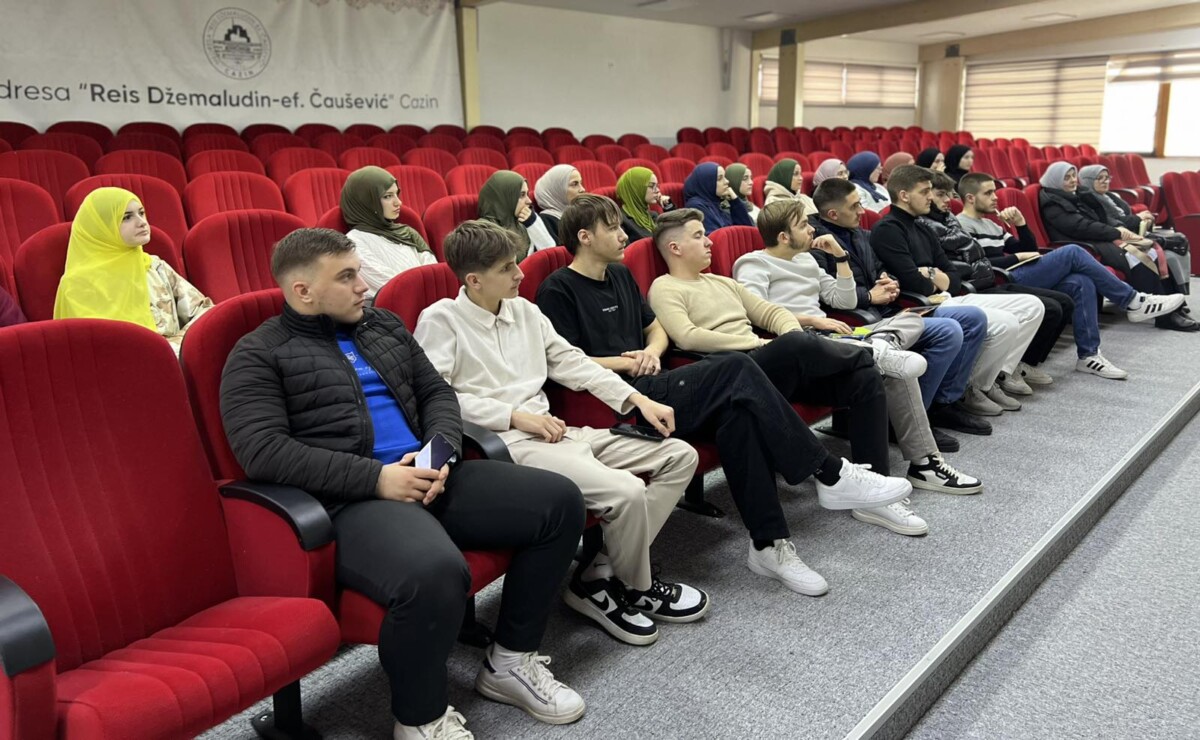
In the "Reis Džemaludin ef. Čaušević" Madrasa in Cazin, lectures and workshops were held within the project "AI and Media Literacy for the Future," with the aim of strengthening critical thinking and the responsible use of digital media among young people. The lectures were led by Amer Džihana and Zarfa Hrnjić-Kuduzović.
Džihana introduced the students to methods of recognizing fake news through practical exercises, while Hrnjić-Kuduzović showed the young people how social networks function and how social network algorithms affect users.
Professor and deputy director at the Cazin Madrasa, Harun Pajić, the project coordinator, said that the students had a completely new experience with these workshops.
"I am extremely glad that the students from our madrasa have the opportunity to participate in such a project, because it helps them better understand the world around them, be less exposed to manipulation, and use digital tools, including artificial intelligence, responsibly and conscientiously," said Pajić, emphasizing that this is a project directly related to what young people are living through.
According to the students, the project is interesting and useful, which is confirmed by their personal impressions and experiences.
"Through this project, I encountered this topic for the first time. It gave me an awareness of how unreliable today's information from the internet often is, yet how much we still trust it, which is something I hadn't paid attention to before. During the lecture, the professors interacted with us, which made us think about the whole topic not only with logic, but also with emotions. I believe this knowledge is very important for all people, because we live in a time where almost our entire lives are exposed to the internet, and where we draw most of our information from it. That is why I am happy to participate in such a project," emphasized student Šejma Grošić.
"It is an exceptional honor for me to have the opportunity to attend the lectures, workshops, and listen to top lecturers talking about a topic that should concern all my peers, but also other people who are regularly exposed to the use of social networks and other media of today. The first couple of lectures at the very beginning of the project opened my eyes and taught me how to choose the sources from which I get informed wisely, and how to recognize media that are not credible and do not work in the interest of society. I look forward to further participation in this project," said student Faris Subašić.
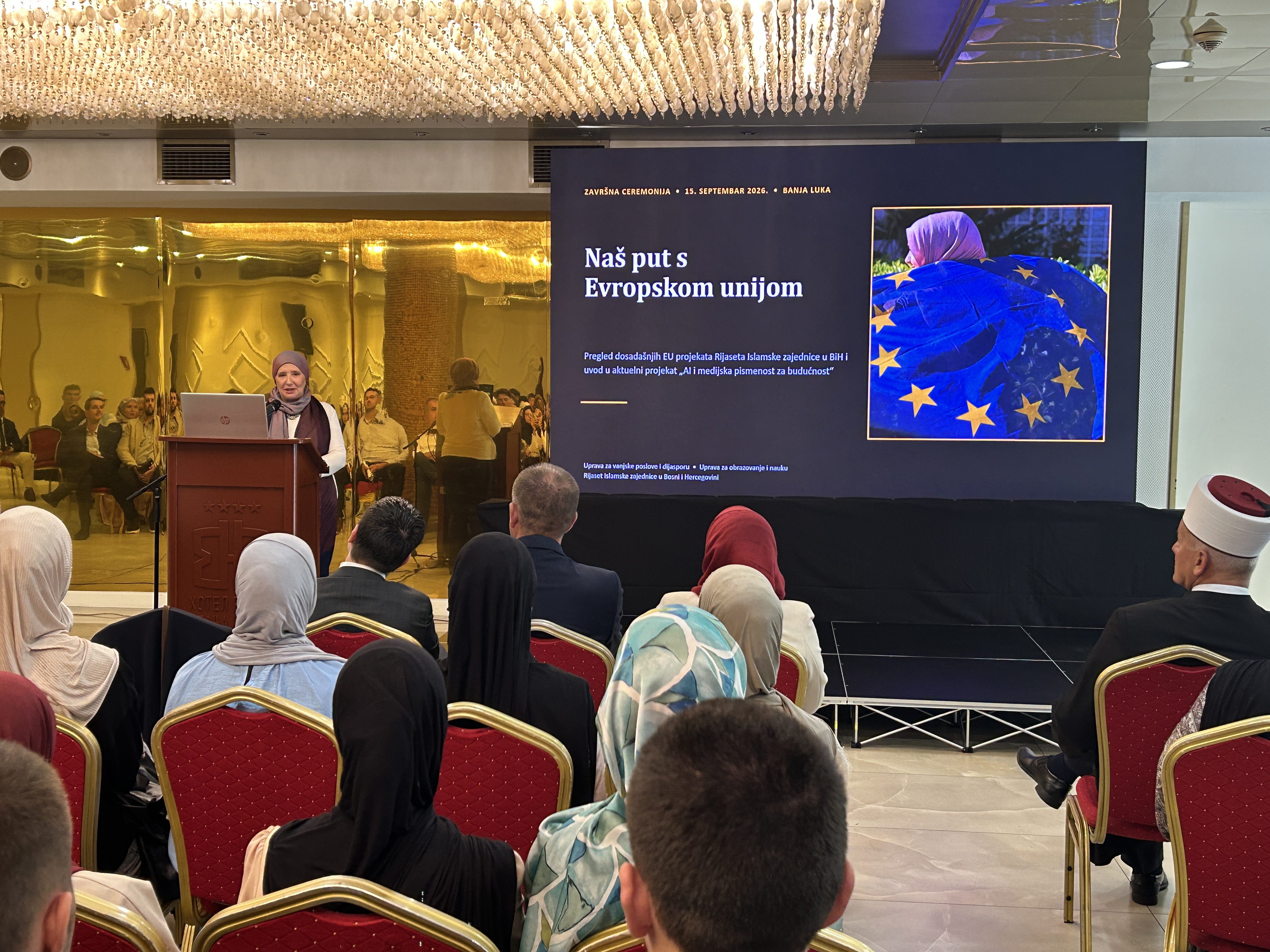
The project "AI and Media Literacy for the Future" is being implemented by the Islamic Community in BiH in cooperation with the European Union and the European External Action Service (EEAS). It is a nine-month program that will be conducted in all seven madrasas in BiH, encompassing more than 150 students. The goal of the project is to empower young people with knowledge of media and digital literacy and prepare them for the responsible and ethical use of artificial intelligence in modern society.