Young people on their reality: Algorithms feed us the content they want, and we are often unaware of it
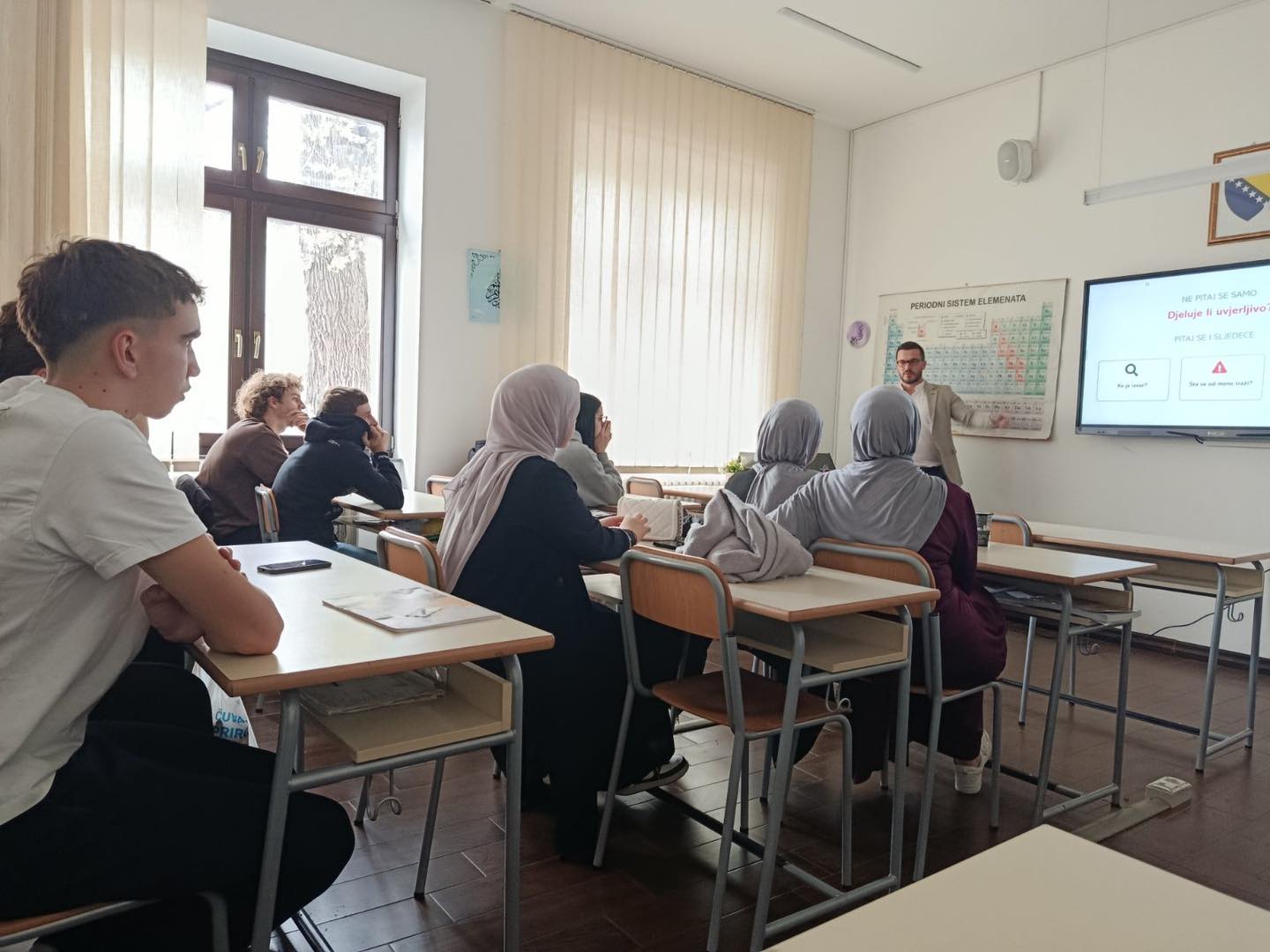
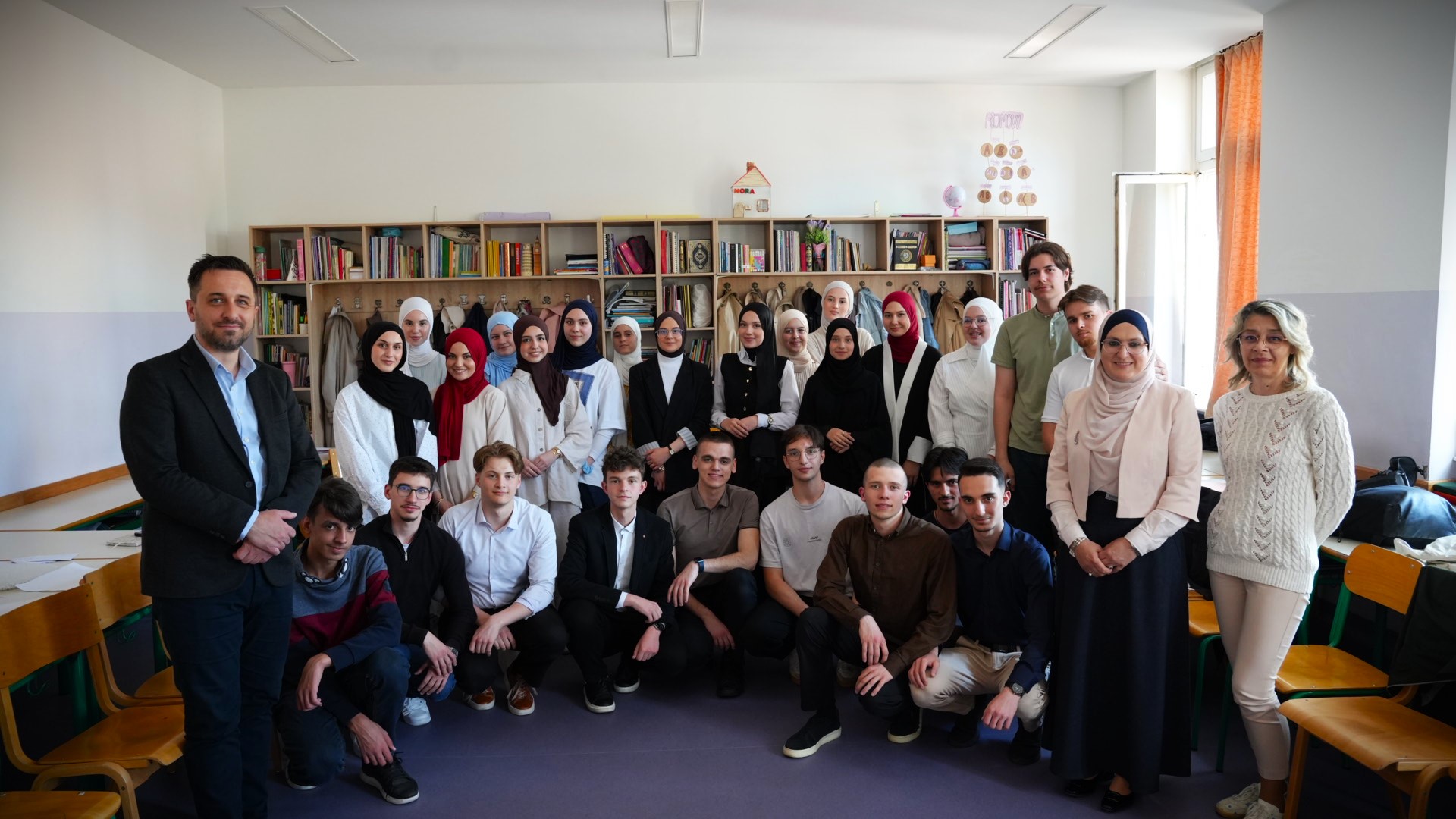
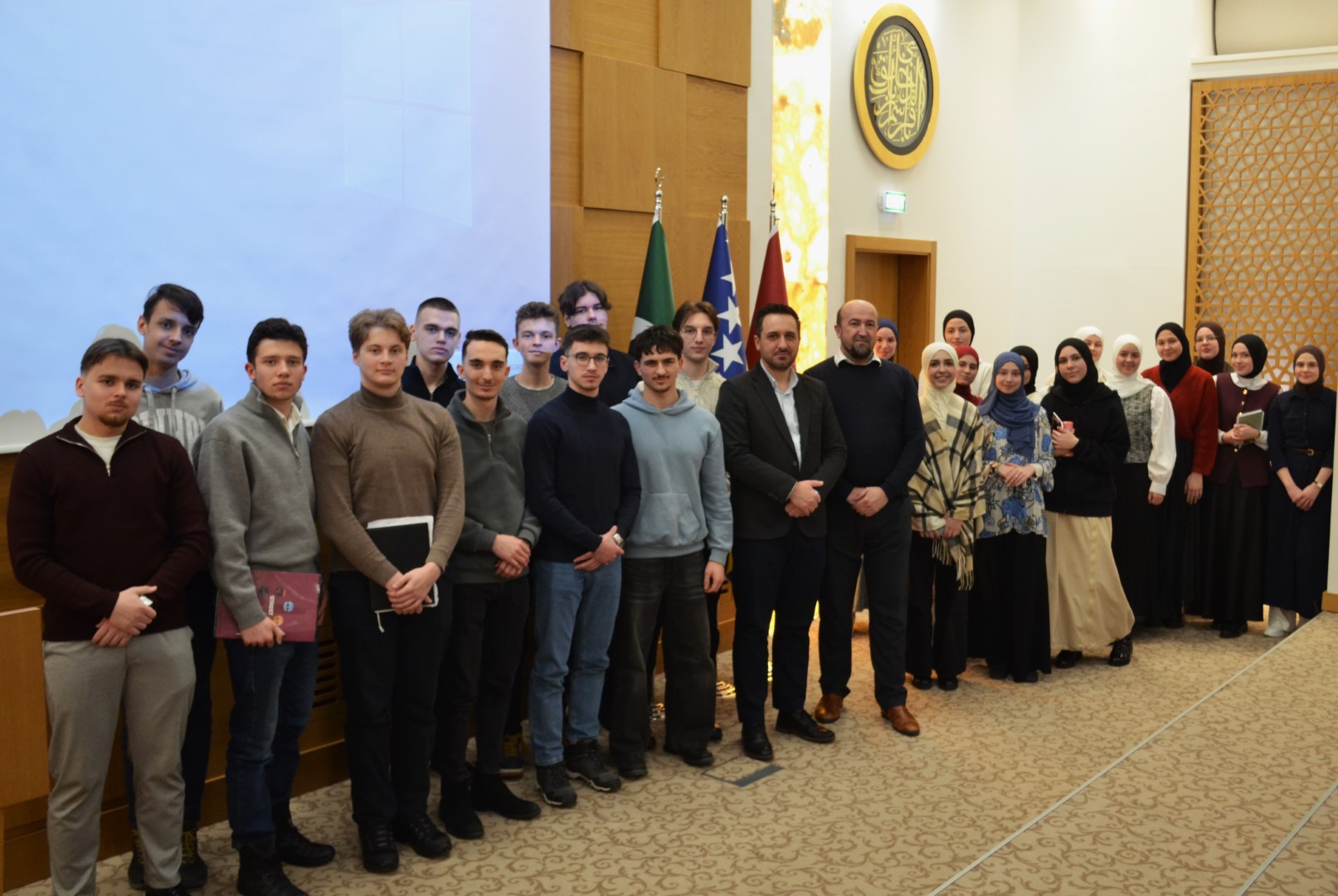
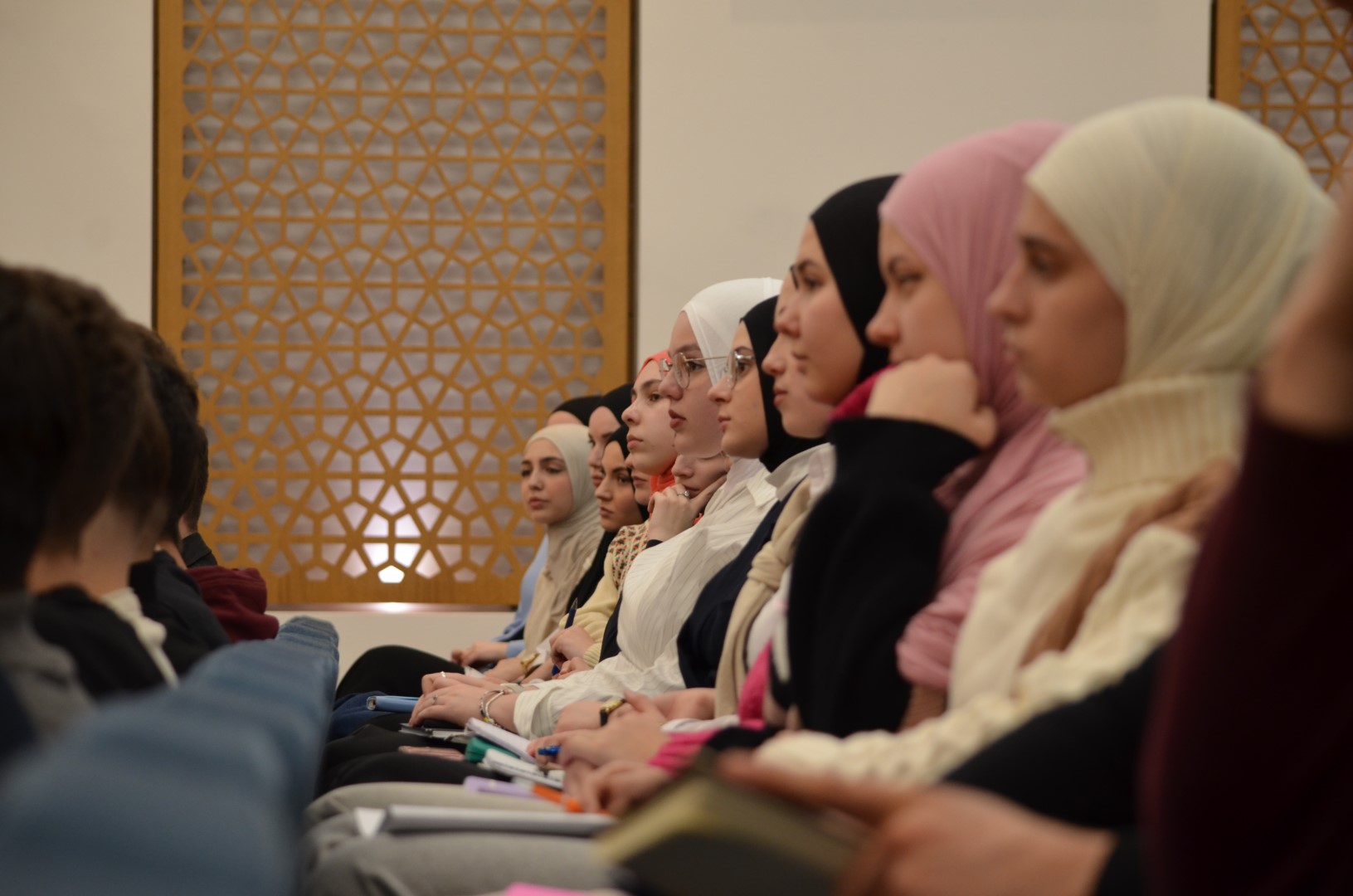
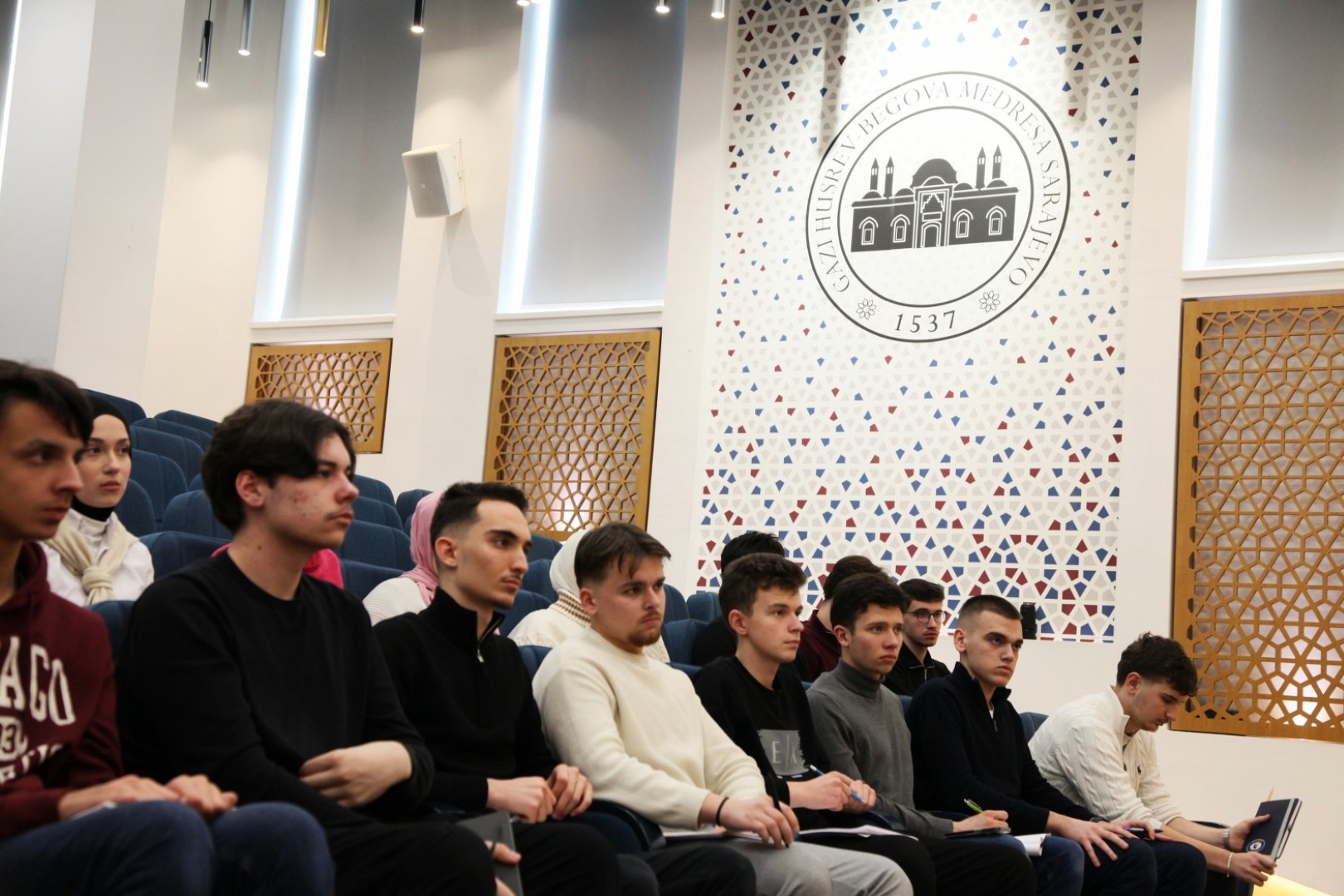
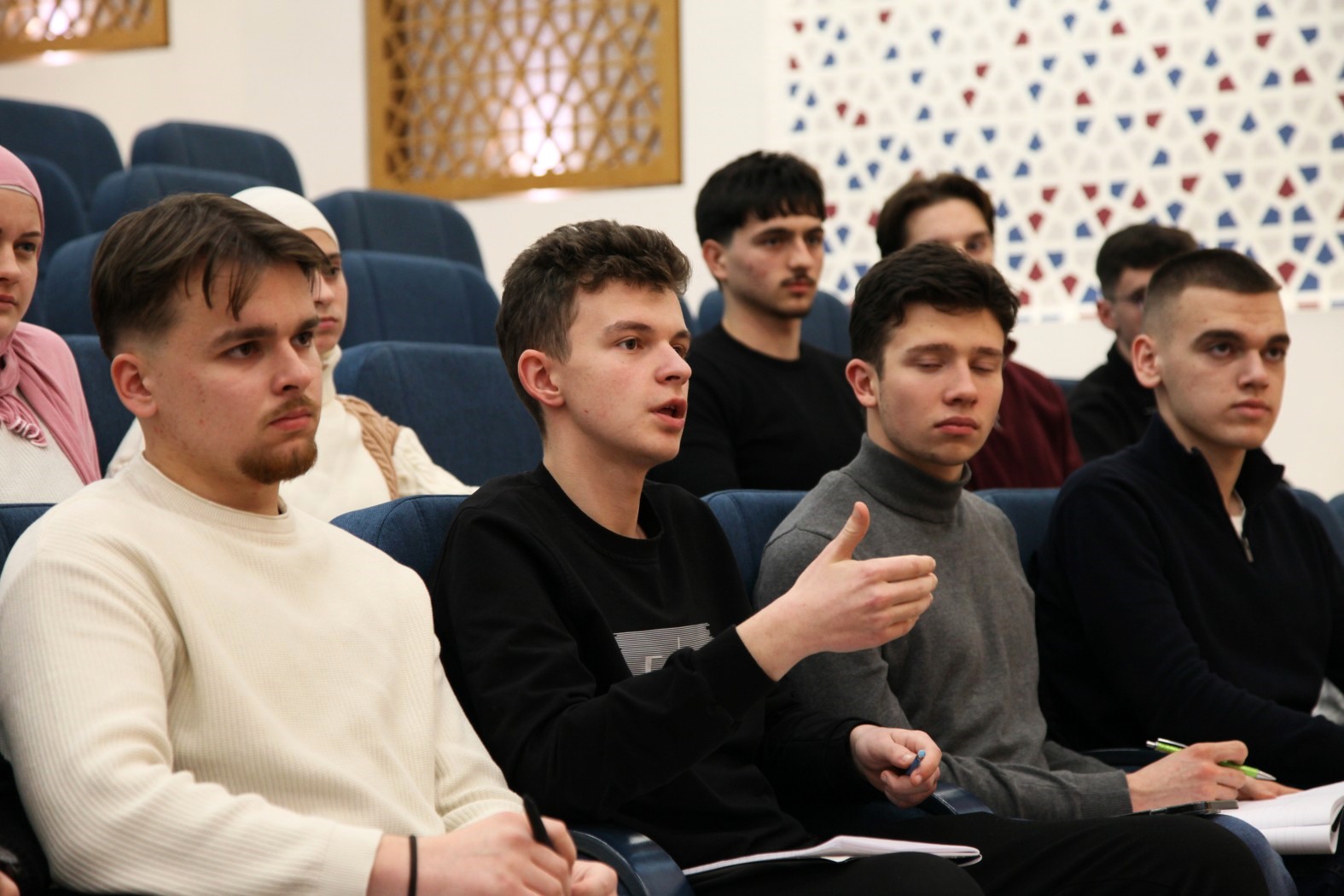
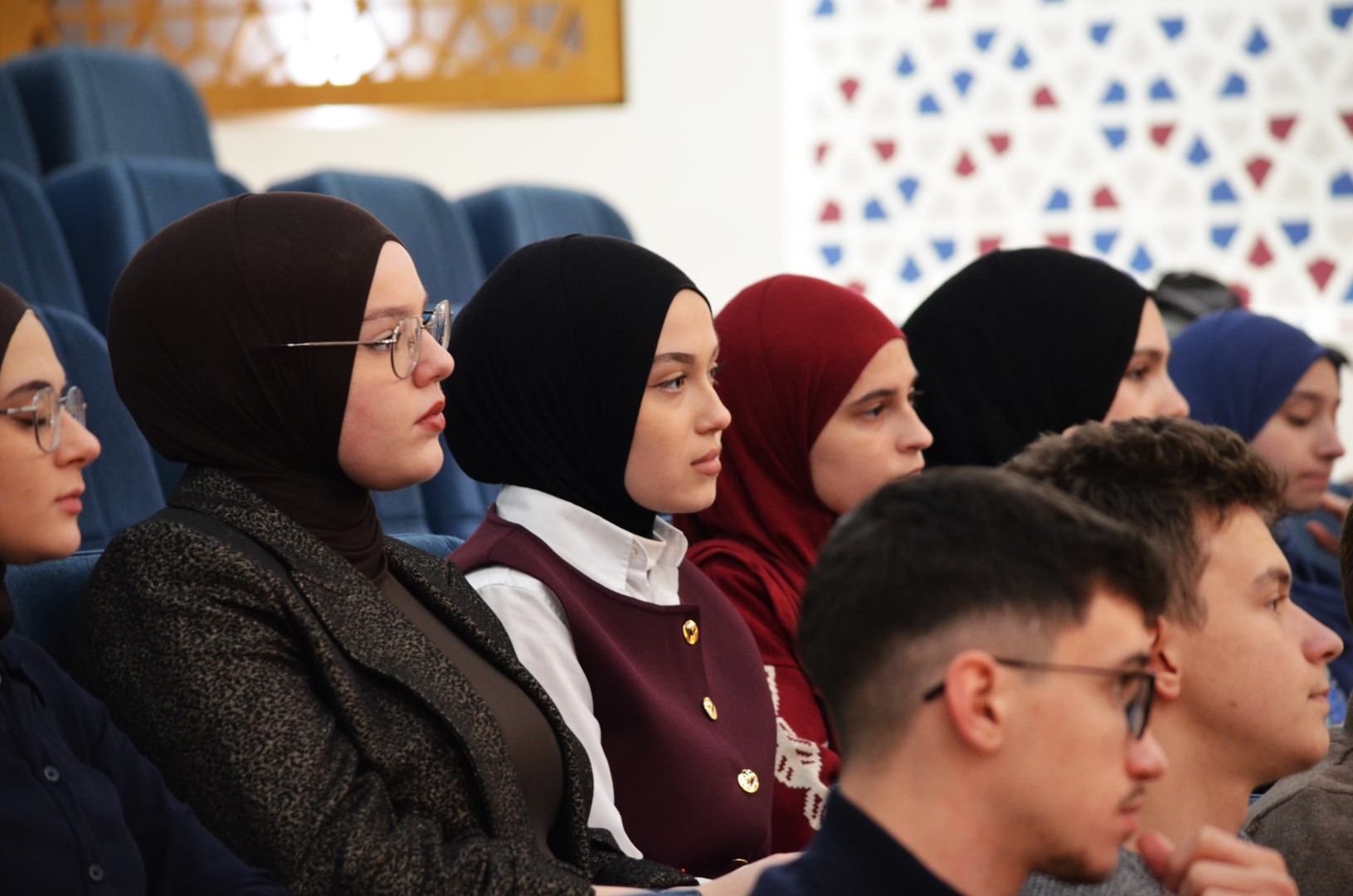
In the Gazi Husrev-beg Madrasa in Sarajevo, on January 20 and 21, lectures and workshops were held within the educational project "AI and Media Literacy for the Future," which will also be implemented in Banja Luka, Tuzla, Mostar, Travnik, Cazin, and Visoko.
The first lecture and workshop were held by Amer Džihana, who introduced the madrasa students to the methodology of recognizing fake news with practical exercises using real examples from domestic and regional media. The second lecture and workshop were held by Muhamed Jusić, who spoke about media literacy in the Bosnian and regional context of the Western Balkans, with a historical overview: from war propaganda in the nineties, through the post-war period, to modern forms of information warfare via digital platforms.
The lecture was also attended by Mensur Kerla, assistant director for teaching, who is also the project coordinator on behalf of the Gazi Husrev-beg Madrasa, and Seid Eminović from the Directorate for Education and Science of the Riyasat of the Islamic Community in BiH.
According to the students, this is a project that directly concerns what they live. "This education is not like the others. We learn about modern problems and their solutions, as well as ways to recognize them using the rules and concepts we learned in the lectures. The knowledge we acquire in this education is directly applied in real life, and that detail is exactly what is most important to me," said student Imad Mameledžija, emphasizing the practical application of what was learned.
"From lecture to lecture, I become more aware of the content I watch on the internet and social networks. I am beginning to more easily recognize false information and the impact of social networks on my daily life. I would particularly highlight the fact that young people are losing their attention span with the increasing use of the internet, more precisely, the consumption of short-form content. Because of the huge amount of information that the human brain receives in a short period, we lose the feeling of connection with the information," Imad explained, pointing out that his generation has problems with emotional attachment to things and people, as well as with approaching everyday problems more seriously.
"Algorithms feed us the content they want, and we are often unaware of it. We also learned how stereotypes of certain nations are portrayed in the media and how this creates even bigger problems, often simply by the way the headline of a post is written—flashy and provocative—which further worsens stereotypes," added Imad.
Berina Ozdić emphasized that they will try to pass on the knowledge they acquire to others, thereby contributing to the strengthening of critical thinking and the responsible use of information in society. "In this project, we are preparing for the difficulties that AI can potentially bring us, but at the same time, we are also focusing on the 'little things' that we don't even think about on a daily basis. These are, first and foremost, the truthfulness and the motives behind the news we read. Subconsciously, everyone has a feeling that some information might be incorrect and that behind certain disinformation lies a goal that is, let's admit it, sometimes more dangerous than it looks—manipulation of opinion, political pressure, or even economic benefit. However, rarely does anyone engage in a deeper consideration and acquire the skill not to spread such information further, but rather to recognize and prevent it," said Berina.
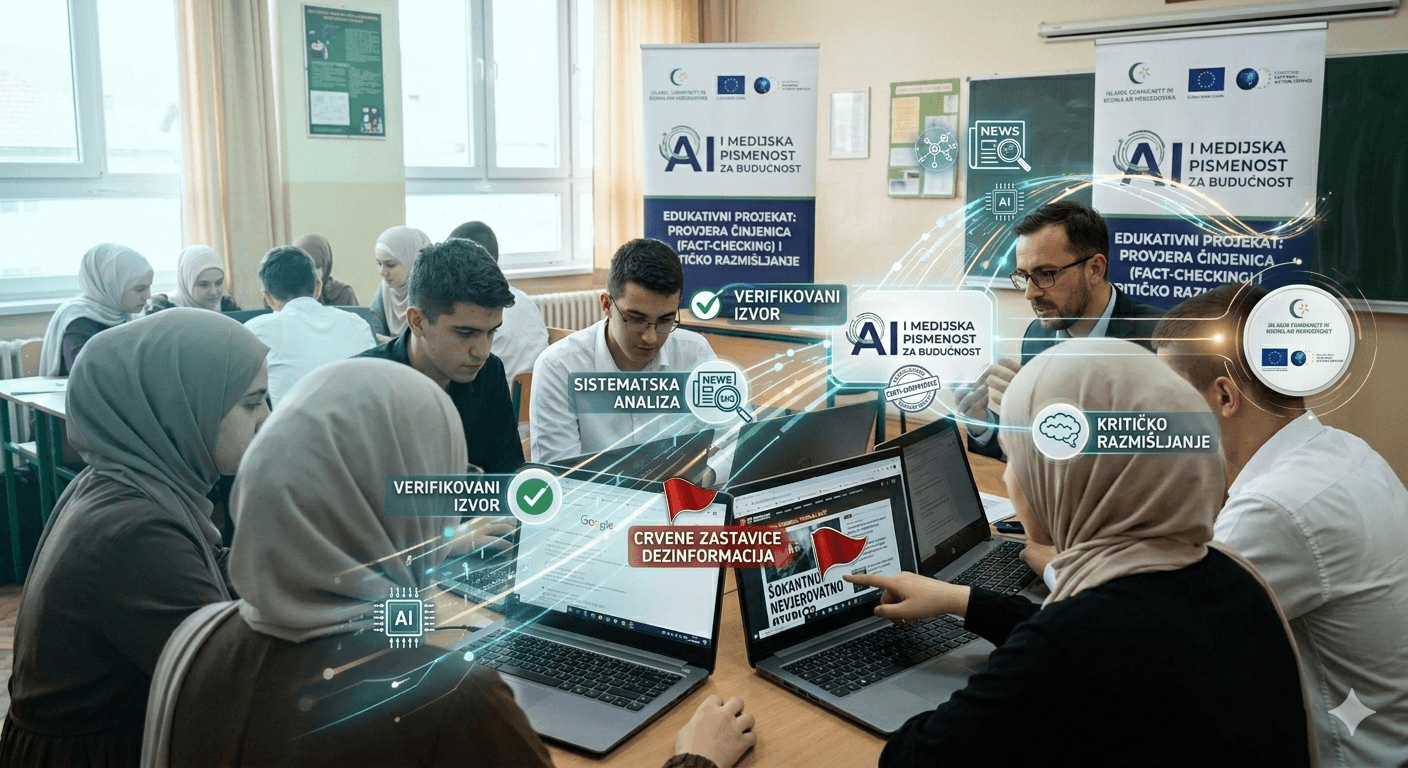
According to Sumejja Juzbašić, the project participants learned to recognize the difference among facts, to distinguish factual claims from opinions and beliefs, and to recognize the manipulation tactics themselves that individuals and media use on the internet.
"When a line is drawn among these concepts, the manipulative segments of media propaganda are reduced. Also, we touched upon many media manipulation tactics of today, such as algorithmic isolation, shallowing, securitization and politicization, spinning..." explained Sumejja, pointing out that for the first time they encountered and learned what the process of the securitization of Islam is.
"Through the media, Islam is presented exclusively as a security issue or threat. In this way, the beauty and essence of Islam are intentionally covered up, and the focus for the majority is placed on fear and stereotypes. Thus, the basic human rights of Muslims are neglected for reasons of 'security.' Precisely because of this, media literacy is very important today. It helps us to know how to recognize false narratives, preserve our integrity, and not allow ourselves to be manipulated and thus stripped of our basic human rights," Sumejja emphasized.
Muhamed Išerić noted that during this education, he and his friends realized that they could immediately apply the acquired knowledge when using the internet and following the media. "During the lectures so far, I have become more aware of my own habits on the internet and social networks. I pay more and more attention to why certain content appears to me and what impact it has on my opinion. I also notice how often we receive information without a stronger reaction, probably because we are constantly exposed to a large amount of content that is not always possible to fully process," Muhamed said, emphasizing the importance of understanding the way the digital world affects our attention and perception of reality. "This education encourages me to stop, think, and not take information for granted. My experiences so far show me that real knowledge is not in the amount of information, but in the ability to critically analyze it and responsibly use it," concluded Muhamed.
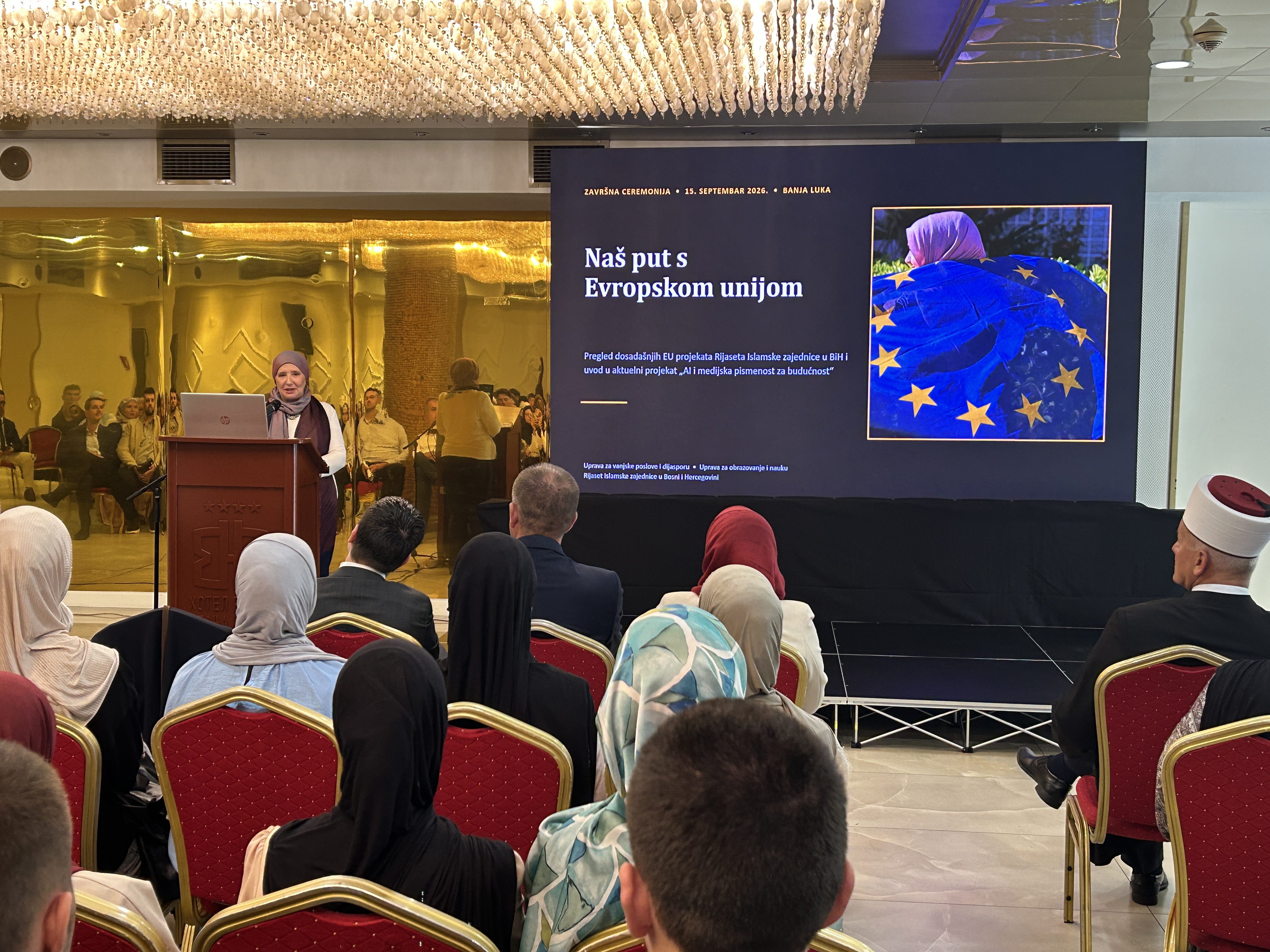
The project "AI and Media Literacy for the Future" is being implemented by the Islamic Community in Bosnia and Herzegovina, through the Directorate for Foreign Affairs and Diaspora and the Directorate for Education and Science of the Riyasat of the Islamic Community, in cooperation with the European Union and the European External Action Service (EEAS). It is a nine-month project that will be implemented with four modules in all seven madrasas in Bosnia and Herzegovina, and will include more than 150 students, who will receive certificates for their acquired competencies upon completion of the program.
The goal of the project is to empower young people with knowledge and skills in the fields of media and digital literacy, critical thinking, and the responsible and ethical use of artificial intelligence, so that they become active and responsible participants in the modern digital society.